DIGNITY OF CHILDREN · DR. TOLEDO
The Weekly Practice
Issue No. 04 Week of July 14, 2026 Theme: Belief
A Message to the Program Leader
The role you carry has grown into something few people outside of it fully understand. You hold outcomes for young people, the wellbeing of your staff, the trust of families, and a hundred details a day. All of it fits inside a short window of time. That demand asks you to keep expanding yourself, and it brings pressure you do not always know where to put. Here is what I want you to hold onto. Who you are is how you show up, first to your staff and then to your children. So the most important system in your program does not live on a wall or in a binder. It is you, grounded and clear. When you take a breath and come back to yourself, you are not stepping away from the work. You are doing the first part. Your calm is what your staff and your children borrow from.
Give yourself permission to sit still for a moment, even in the middle of everything. That stillness is where clarity comes from. Clarity lets you see what needs adjusting rather than reacting to it all at once. You do not have to fix the whole program today. You get to look at one room and one system and make it a little better. That is how real change holds. And do not lose sight of what you already carry. Problem-solving is the nature of your job, and you do it every day without naming it. The same confidence you build in your children is the confidence I want you holding for yourself. It is the belief that says I can meet a challenge and I am responsible for my own choices. So take a breath and name the one thing you want to improve this week. Then take that single step. When you lead from that grounded place, you build an environment where you thrive, and everyone around you thrives too.
With dignity and purpose,
Dr. Toledo
Sonia Toledo, PhD · Founder, Dignity of Children · Author, Beyond Supervision
THIS WEEK'S FOCUS:
Belief
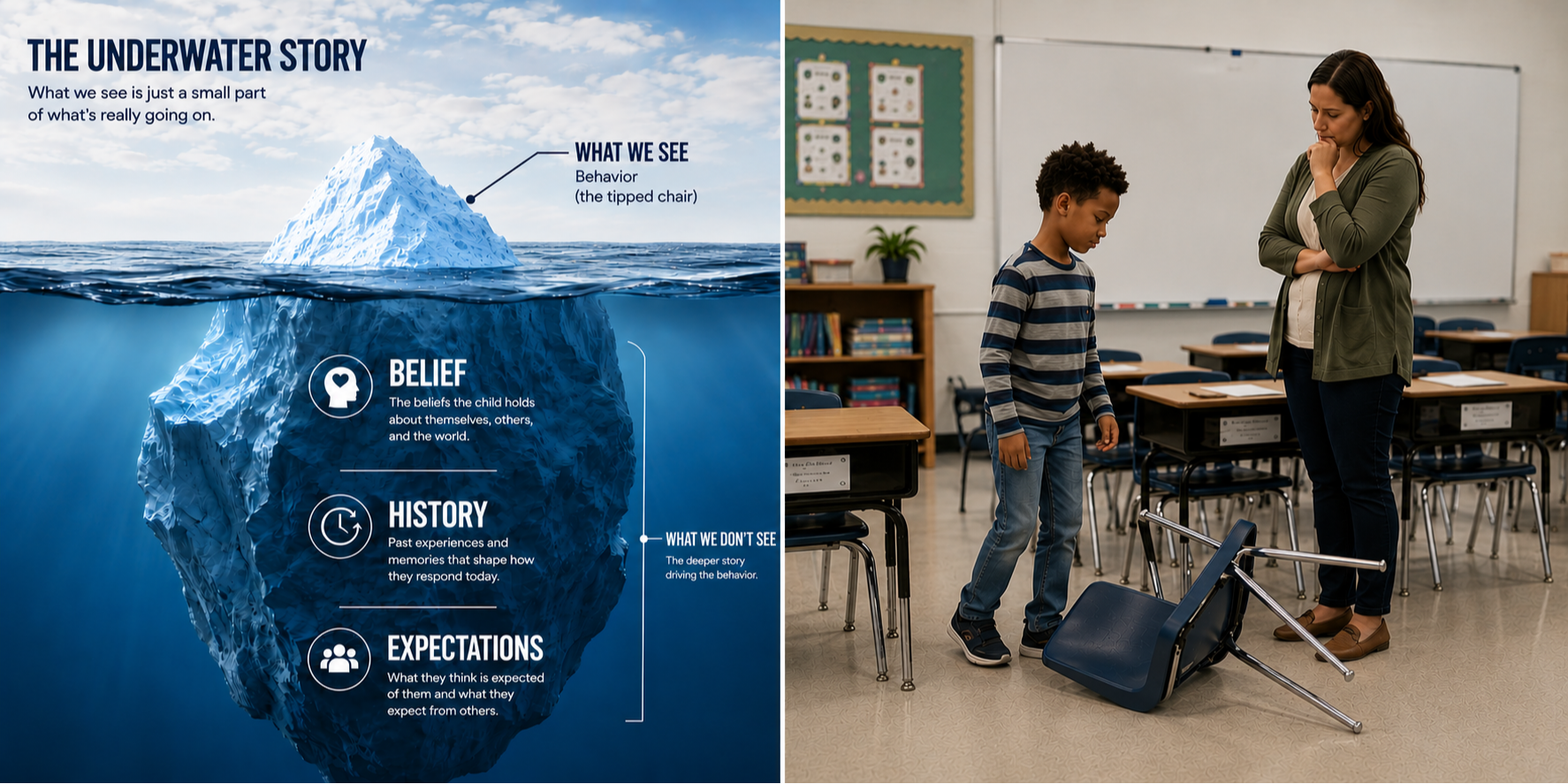
Belief is the quiet meaning you assign to what you see, and it arrives before you have time to think. A child knocks over a chair, and in the space of a breath you have already decided something, that this is defiance, or that this is a child who is overwhelmed. You did not choose that decision on purpose. It rose out of your own history, your training, and the state your body happens to be in at that moment. That is what belief is. It is not a slogan, you repeat yourself. It is the story running underneath your reaction, mostly out of sight.
Belief sits first in the framework because it colors everything that comes after it. Whatever strategy you reach for is already shaped by what you decided the behavior meant. If you believe a child is testing you, even a calm response carries an edge the child can feel. If you believe the same child is struggling, the very same words land as support. Your belief is the first thing another person receives from you, before your tone and long before your words, because a child reads your face and your body faster than your sentences. This is why two adults with identical training can run into two different rooms. The training was the same. The belief underneath it was not.
This is one of the steadier findings in the research. Rosenthal and Jacobson (1968) told teachers that certain students were about to flourish, and those students went on to outperform their peers, not because the children had changed, but because the teachers' expectations changed how they taught them. Dweck (2006) found something close: when an adult believes an ability can grow, they teach toward it, and when they believe it is fixed, they quietly stop trying. In both cases, the belief came first, and the outcome followed the belief.
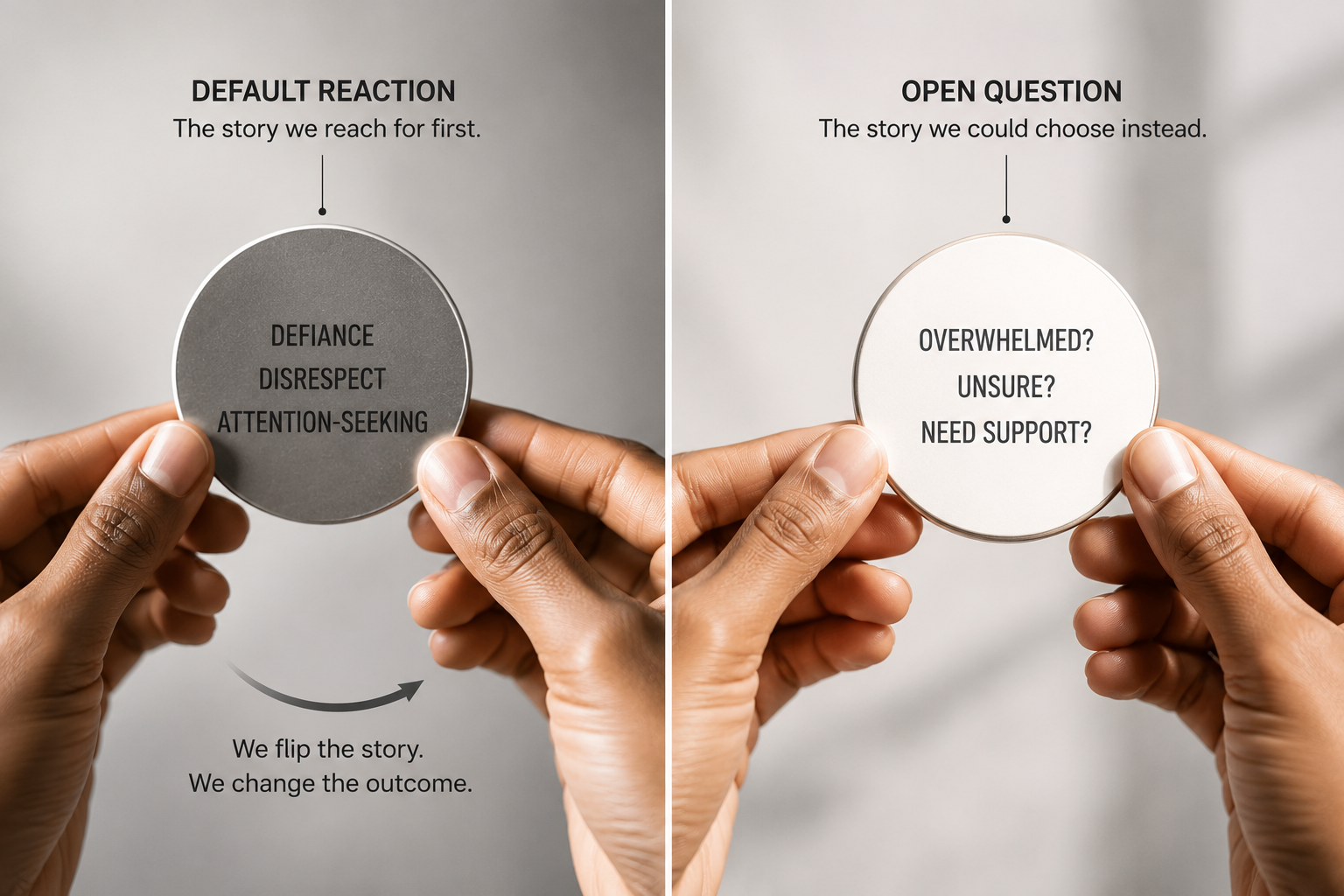
This is why belief is inside work, and why it belongs at the start. You cannot perform a belief you do not hold, because the child will read the mismatch on your face. What you can do is notice the story you are telling and ask an honest question of it is this true and is it the most useful true thing I could hold right now. You are not forcing yourself to think positively. You are choosing, on purpose, which true story to lead with, because the one you choose is the one that shapes what you build next.
Next week we are moving to the nervous system. If belief is the story you carry, the nervous system is the body that carries it, yours first and then theirs, and it decides whether anyone in the room can act on the belief at all.
Source and reading: Rosenthal, R., and Jacobson, L. (1968). Pygmalion in the Classroom. Holt, Rinehart and Winston. Dweck, C. S. (2006). Mindset: The New Psychology of Success. Random House.
This Week's Practice: Catch the Story, Then Turn It Over
A belief is hard to change while it is still invisible to you. This practice makes one belief visible, then gives you room to hold another. It takes only a few minutes a day for one week.
- Choose one person. Pick one child or one staff member whose behavior has been landing hard for you lately.
- Catch the story. The next time they do the thing, before you respond, name the story you are telling yourself in a single sentence. Do not judge it. Just catch it.
- Turn it over. Ask one honest question. If the opposite of my story were true, what would I do differently at this moment? Then try that response once.
- Notice what changed. At the end of each day, write one line about what the second story shifted, in the moment and in the relationship. At the end of the week, read your lines back and notice which story you reached for most, and what it built.
Where This Begins: Beyond Supervision
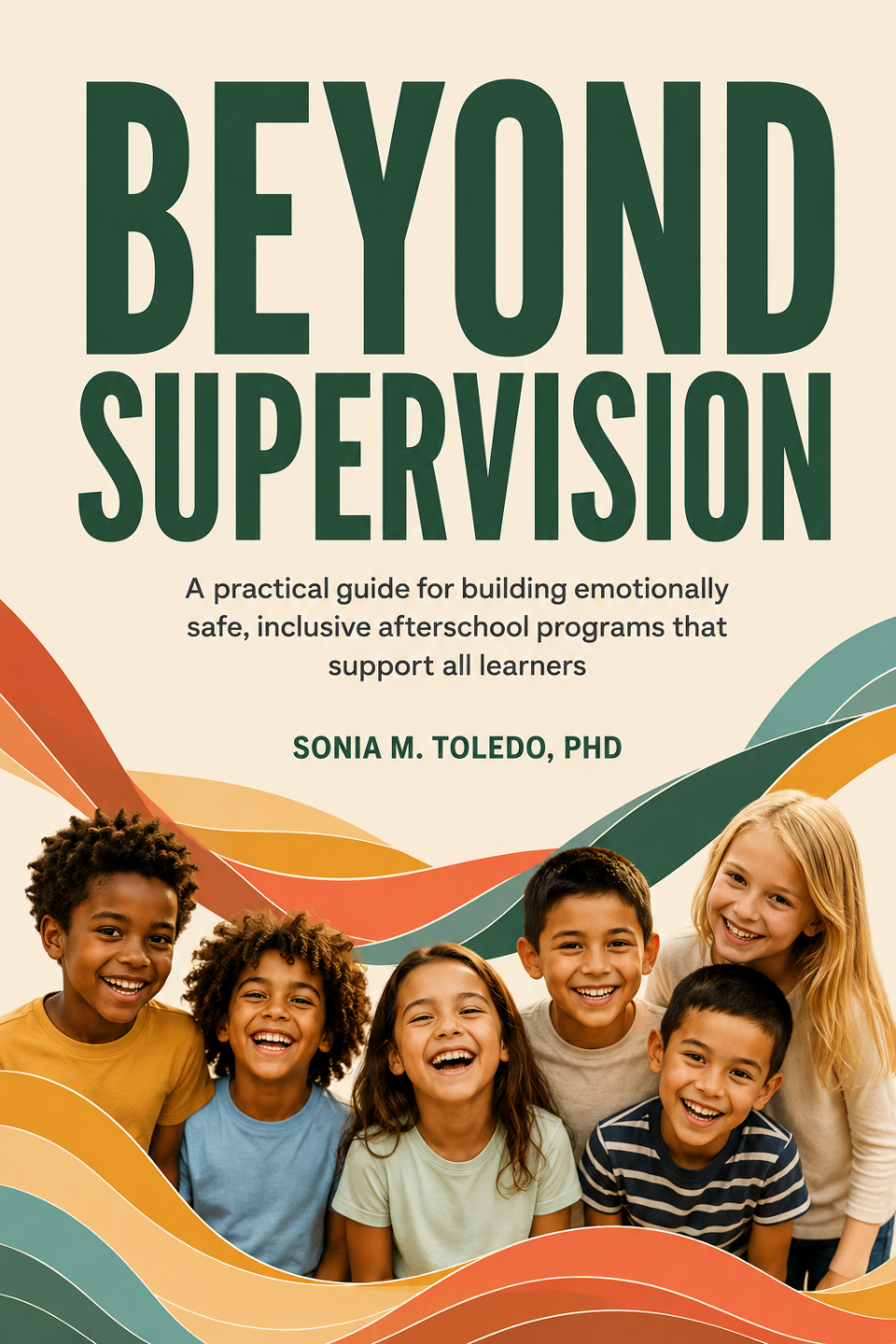
Everything in this practice comes from my book, Beyond Supervision. Belief is where the book begins, because it is where the work begins, and the chapters that follow walk through the rest of the framework, from the nervous system to the outcomes you are working toward.
You are reading this because you already know and value this work, and that makes your voice one of the most useful there is. An honest review on Amazon helps another after-school leader find the book and decide if it is worth their time. It takes about two minutes, and it is one of the simplest ways you can help this work reach the people who need it. If Beyond Supervision has been useful to you, I would be grateful for an honest review.
Get your copy of Beyond Supervision HERE
Please consider leaving a REVIEW.

What Staff Are Saying About From Our Training
Our workshop, From Distraction to Action, in the words of the staff who took it.
This week we begin with the From Distraction to Action workshops. These sessions help staff move from noticing a hard moment to responding to it with a concrete strategy. Rather than leaving a training session with ideas that fade by the next shift, participants practice small, repeatable moves that address the nervous system before the behavior and choose a next action that builds a skill rather than simply ending a disruption.
Here is what staff are saying:
"I learned a lot on this training about how we can help neurodivergent students develop and improve their core executive functions."
Matthew, MMCC
"I loved learning about different tips I could do in order to help out the kids I work with such as a first grader named Legacy. Legacy has a habit of ignoring me and getting her own way, but if I keep observing her, I could realize that she just needs more help to control herself."
Alisha, MMCC
"The Distraction to Action workshop was phenomenal. The presenter was great at facilitating and providing us with solid advice on how to be better group leaders."
Alece, MMCC
If you would like to plan professional development for your team, the From Distraction to Action workshop can be scheduled directly with us. A trained team is the most reliable system a program can have. Here is a list of our workshops
PARTNER HIGHLIGHT
We Cannot Do This Work Alone
None of us builds a strong program in isolation. The leaders who go the furthest are the ones who surround themselves with partners, resources, and people who strengthen the work. Each week we will introduce a new partner you can add to your own resources, so that over time you build a network you can lean on instead of carrying everything yourself.
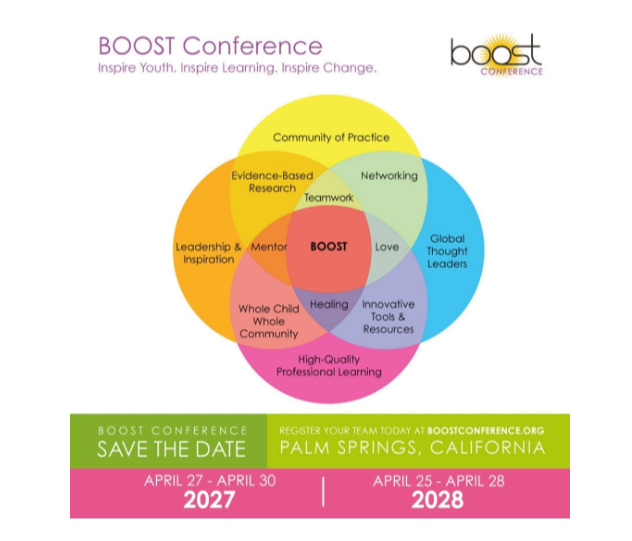
This week's partner is the BOOST Conference 2027.
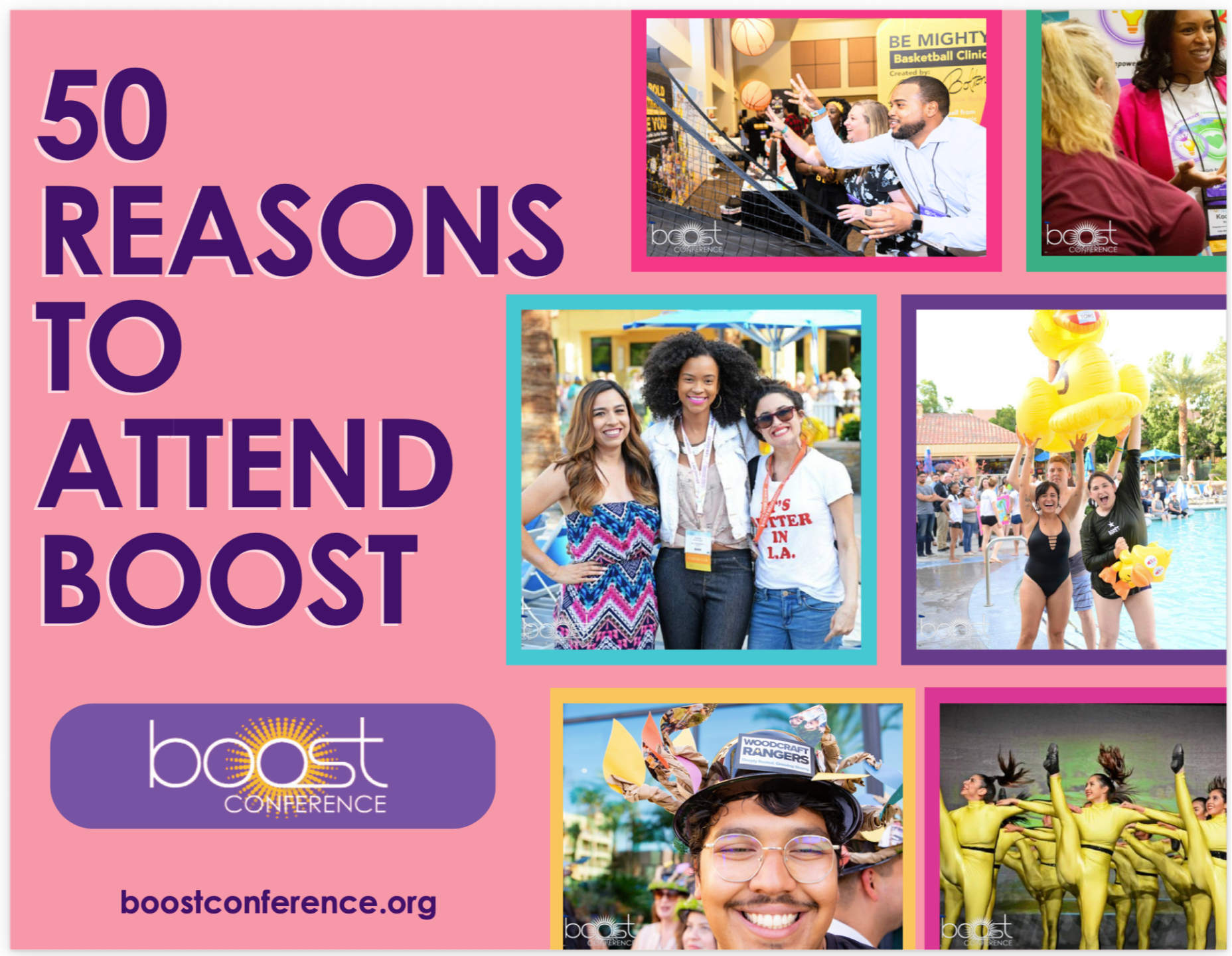
BOOST is the largest gathering in the country for after-school, expanded learning, and out-of-school time professionals, held in Palm Springs, California, from April 27 to 30, 2027. For four days you sit among more than three thousand directors and youth-development leaders, and you choose from more than two hundred workshops built for your needs. Most professional development is written for the classroom and handed to you to adapt. This one is built for your world from the start.
Here are 50 reason to join BOOST in 2027
TRENDS IN YOUTH DEVELOPMENT
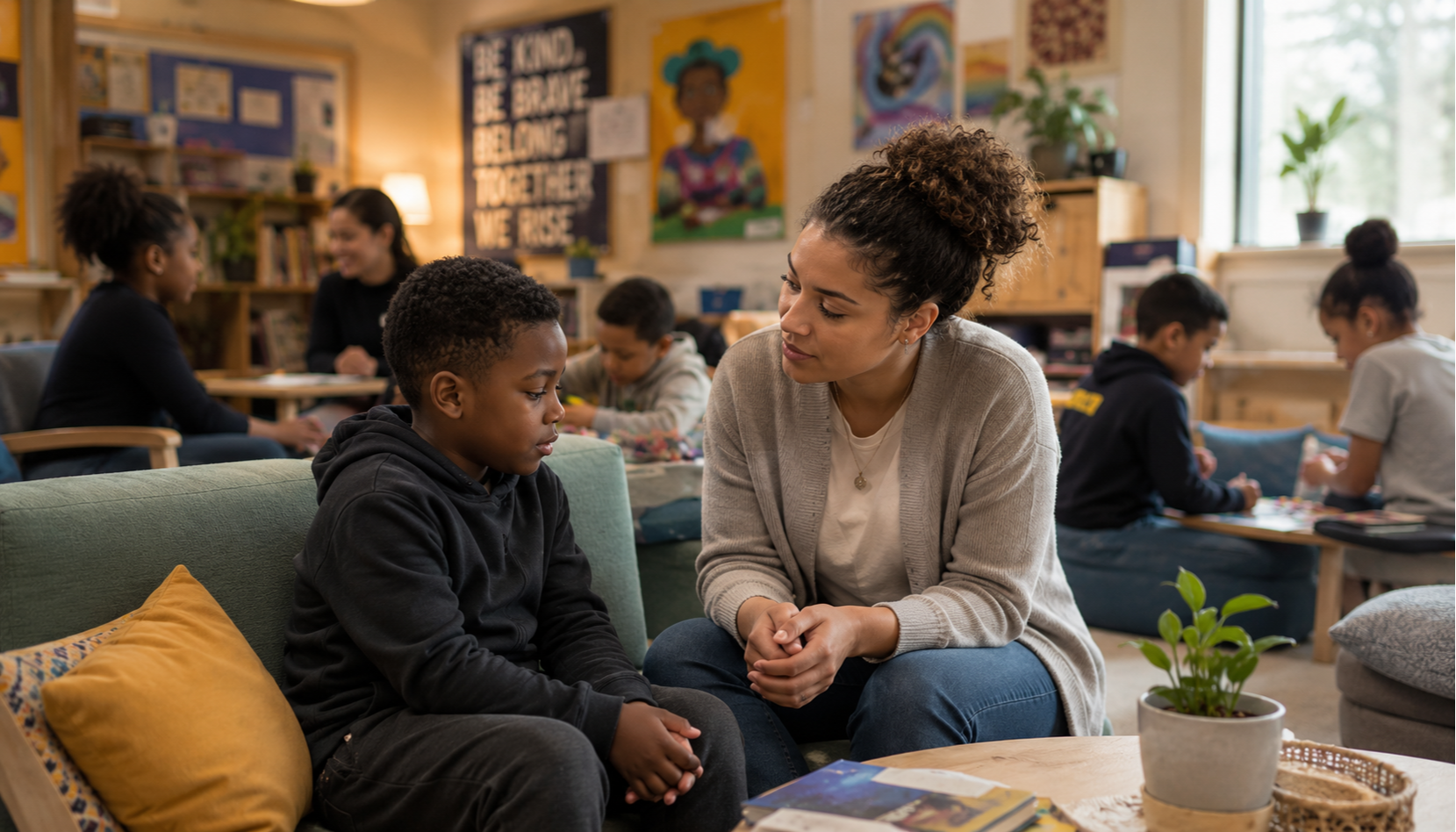
The clearest current trend in youth development is a move away from treating behavior as a problem and toward understanding the nervous system as relational. In a March 2025 piece for Edutopia, educator and author Dr. Lori Desautels describes connection and belonging as the ground from which healthy development grows, not an extra you add once behavior is under control. She writes about touch points, the small and intentional moments of connection between a trusted adult and a child across a day, and about co-regulation, the practice of lending your own calm to someone who cannot yet find their own. Her point about the adult is the one that matters most for us: “you cannot give what you do not have.” A regulated adult is not a nice addition to work. It is the instrument the work runs on.
This connects directly to where we started this week. Desautels note that children need reassurance that they are not damaged or somehow wrong, which is a belief rather than a strategy. When you hold the belief that a child is struggling rather than misbehaving, and you are regulated enough to show it, you become the trusted adult whose calm a child can borrow. The trend in the field is naming is the work you are already doing. It begins on the inside, with the adult, exactly where the framework begins.
Source and article: Desautels, L. (2025, March 24). Creating Moments of Connection with All Students. Edutopia. https://www.edutopia.org/article/creating-moments-connection-students
A Question to Carry into the Week
What is one belief you hold about a child, a staff member, or yourself that you have never stopped asking whether it is true?
With dignity and purpose,
Dr. Toledo
Sonia Toledo, PhD · Founder and CEO, Dignity of Children · Author, Beyond Supervision
P.S. If this issue named something you carry, forward it to one colleague or leader who would recognize it too. The practice grows when it is shared.

Join the Safe to Thrive movement HERE
Get your Copy Beyond Supervision
Enroll to Lead with Heart & Mind: 6-Week Guided Transformational Journey HERE
Book Professional Development Workshops for Educators HERE
Book Professional Development Workshops for Leadership HERE
Register for Director's Lab 2.0 - a program for Supervisors and Directors
To discuss your training needs, schedule a one-on-one consultation with me HERE
Dignity of Children
The Weekly Practice · Building quality through discipline, adjustment, and consistency.