DIGNITY OF CHILDREN · DR. TOLEDO
The Weekly Practice
Issue No. 06 Week of July 28th, 2026 Theme: Executive Function
A Message to the Program Leader
This week, I am asking you to turn your attention toward the one person in your program who tends to receive the least of it: you. Your days are built around reading everyone else, your staff, your children, and their families, and that outward focus is the work itself. It also means your own condition can go unexamined for weeks, until depletion begins making your decisions for you. Caring for yourself is not time taken away from the program. It is the condition that keeps your judgment clear enough to lead it well.
The culture of your program begins with you, because your staff read your face long before they read your memo, and your children read your staff. That is why your self-awareness is program infrastructure rather than a private wellness matter. A leader who can notice her own fatigue, her own assumptions, and her own rising tension before any of it reaches the room makes clearer decisions and models the regulation she asks of everyone else. This week's teaching turns to the third link of the From Belief to Outcomes framework, executive function, and to how you help both your staff and your children build it, work that begins with a leader clear enough about her own state to read theirs accurately.
Your emotional intelligence focus this week: self-awareness. Once each day, pause and name your own condition honestly, whether you are rested or running on empty, patient or short, fully present or somewhere else. You are not solving anything in that moment. You are practicing the habit of knowing your own state, which is the ground beneath every grounded response and every act of self-care that protects it.

THIS WEEK'S FOCUS:
Executive Function
When a person cannot do what you are asking, the useful question is which specific skill has just run out. Beneath a great deal of the behavior we are quick to call defiance, there sits a set of mental skills that psychologists group under executive function, and three of them do the heavy lifting in a program room. Working memory lets a person hold an instruction in mind while acting on it. Inhibitory control lets a person stop the first impulse long enough to choose a better one. Cognitive flexibility lets a person shift when a plan changes or a first attempt fails. When one of these is missing or momentarily overloaded, a capable child produces behavior that looks exactly like refusal, and a stretched staff member misses a step or reacts too fast in the very same way, so we respond to the surface instead of the missing skill.
How much these skills carry is not a matter of opinion, because researchers have measured their reach. In one study, researchers assessed the inhibitory control and attention shifting of children before kindergarten, then followed their academic progress. The children's self-regulation predicted their emerging math and literacy ability, and inhibitory control in particular stood out as a correlate of both, independent of general intelligence (Blair & Razza, 2007). The same skill that lets a child hold back the first impulse in a hard moment is the skill that lets her hold a number in mind or sit with a difficult word, and it is the adult version of that skill you draw on when you pause before answering a frustrated parent.
The second finding is the one that should change how you respond. In a wide review of programs and interventions, researchers found that executive function can be developed in children between the ages of four and twelve, and that it grows through repeated practice and scaffolding rather than through instruction or correction in the difficult moment (Diamond & Lee, 2011). Executive function behaves like a muscle, not a character trait, and the same principle that lets you build it in a child applies to the adults you supervise, who strengthen these skills through clear routines, rehearsal, and coaching rather than reprimand.
For you as the leader, this reframes both halves of your work. With a child, the question shifts from whether he is choosing to defy you to which skill he would need in order to comply, and whether he has it yet. With a staff member, the same lens applies, since an adult who forgets a procedure or reacts too quickly is often showing you an executive function skill that your systems and coaching can strengthen rather than a flaw in character. Can not and will not call for entirely different responses, and only an accurate reading of your own state first and then of the person in front of you tells you which one you are facing. When you name the missing skill, you have turned a discipline problem into a teaching problem, for children and staff alike, and a teaching problem is one your program already knows how to solve.
Source and reading: Blair, C., & Razza, R. P. (2007). Relating effortful control, executive function, and false belief understanding to emerging math and literacy ability in kindergarten. Child Development, 78(2), 647-663. Diamond, A., & Lee, K. (2011). Interventions shown to aid executive function development in children 4 to 12 years old. Science, 333(6045), 959-964.
With dignity and purpose,
Dr. Toledo
Sonia Toledo, PhD, Founder and CEO, Dignity of Children, Author, Beyond Supervision
Next week: once you can name the missing skill, how to build a routine that grows it over time instead of correcting it in the hard moment. We move to the fourth link of the framework, systems.

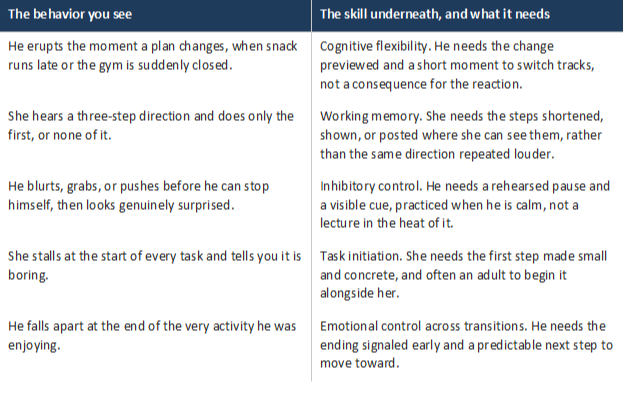
A QUICK DIAGNOSTIC FOR THIS WEEK
When a behavior repeats, hold it beside the executive function skill most likely running underneath it. The examples below are drawn from children, though the same reading applies to an adult on your team. The point is not to label the person but to name what to build, so that your next response teaches the skill rather than punishes its absence.

One Small Step this Week
Find the one transition that most reliably raises the intensity in your program, whether that is the move to the gym, the shift from snack to homework, or the first ten minutes of pickup. This week, place yourself and one staff member there before it begins, settled and in position, so you shape it rather than manage it after it escalates. Where your calm adults stand in, that window is a program of choice, and it does more than any correction after the fact.
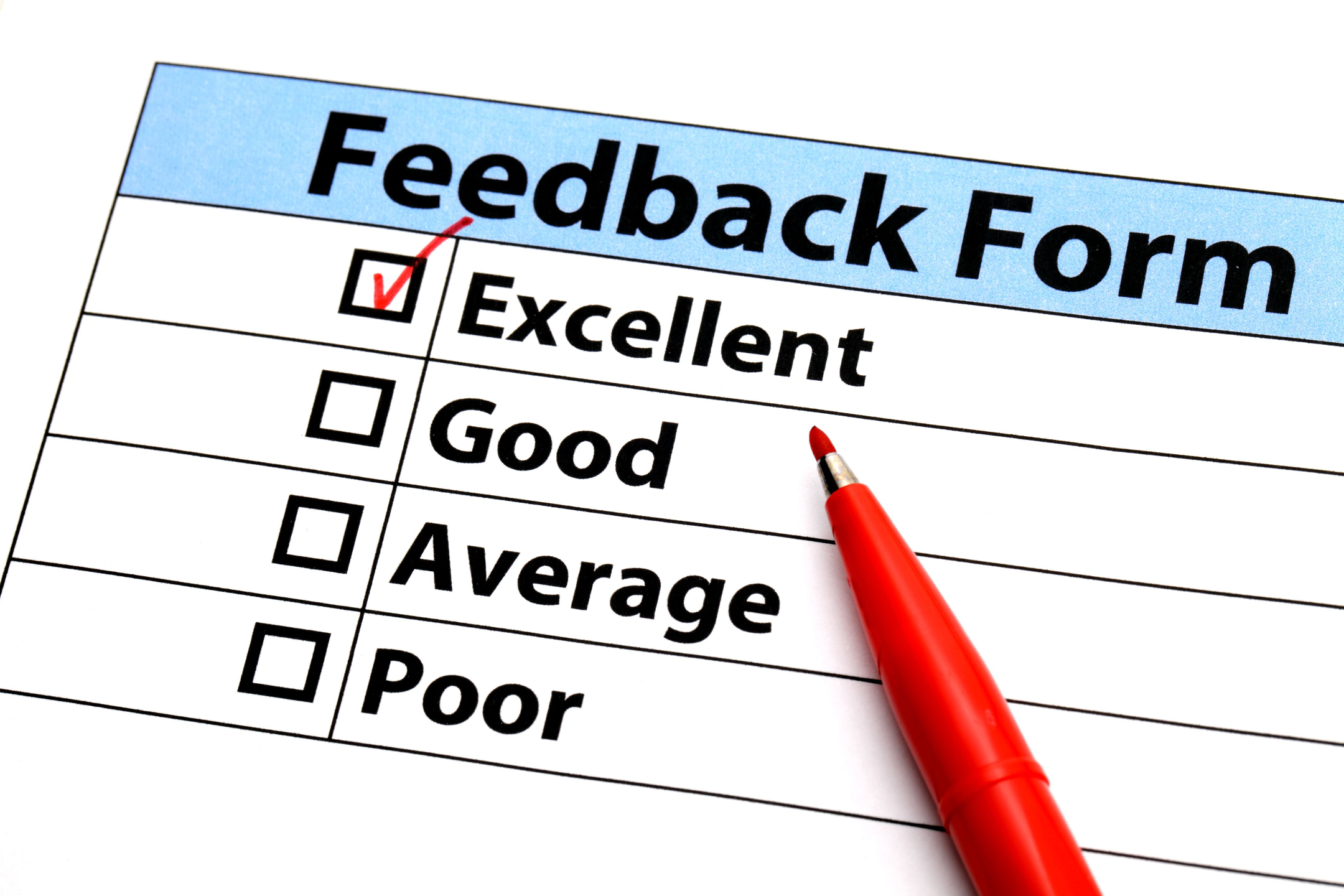
What Staff Are Saying About From Our Training
Our workshop, Enhancing Your Classroom Facilitation Skills, in the words of the staff who took it.
Dignity of Children leads professional development workshops for afterschool and youth program staff, built on the same practices this newsletter works through, from the From Belief to Outcomes framework to the daily work of regulation, relationship, and program culture.
Enhancing Your Classroom Facilitation Skills
In this workshop, we will guide your staff through creating a dynamic after-school classroom environment that fosters sustained engagement among children in both small and large group settings. Participants will acquire a diverse set of strategies and tools to effectively manage the learning space, ensuring an enriching experience for all involved while preserving balance and focus.
To bring a workshop to your team, book a conversation at dignityofchildren.com/afterschool-staff-workshops.
"The experience felt personal, relatable, and applicable. Rosaneli"
— Rosaneli, NYJTL
"This training was very informative and helpful with my own personal goals. It has helped me take a step closer to achieving those goals."
— Destiny, NYJTL
PARTNER HIGHLIGHT
We Cannot Do This Work Alone
None of us builds a strong program in isolation. The leaders who go the furthest are the ones who surround themselves with partners, resources, and people who strengthen the work. Each week we will introduce a new partner you can add to your own resources, so that over time you build a network you can lean on instead of carrying everything yourself.
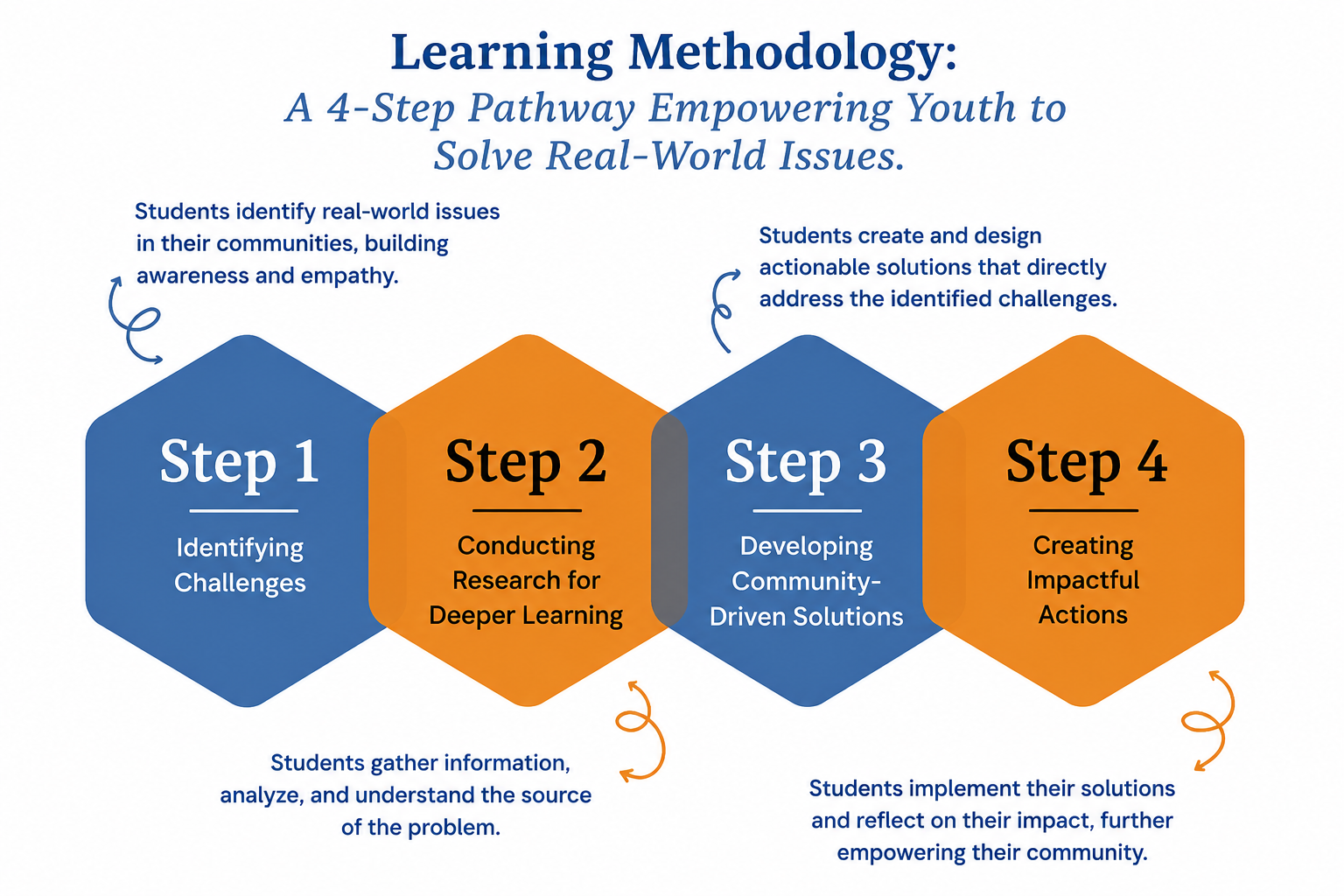
Our Social Entrepreneurship Program is dedicated to building a mindset and skill set in young people that will guide them purposefully through life and career. This program empowers students to identify pressing social issues, conduct research, and develop innovative, community-driven solutions. Through collaboration with mentors and industry experts, students gain invaluable real-world experiences, equipping them with the entrepreneurial mindset essential to drive meaningful change in their communities and beyond. Our goal is to foster the next generation of thoughtful, intentional leaders prepared to make a positive impact in the world.
Through our Project-Based Learning (PBL) pathways, students engage in hands-on projects across six key areas, including Health & Wellness, Financial Literacy, and Community Organizing. These pathways encourage students to explore and address real-world issues, creating actionable solutions that generate both local and global impact. To learn more about our curriculum, visit: https://www.ideasbyyouth.org
READ THE FULL FRAMEWORK
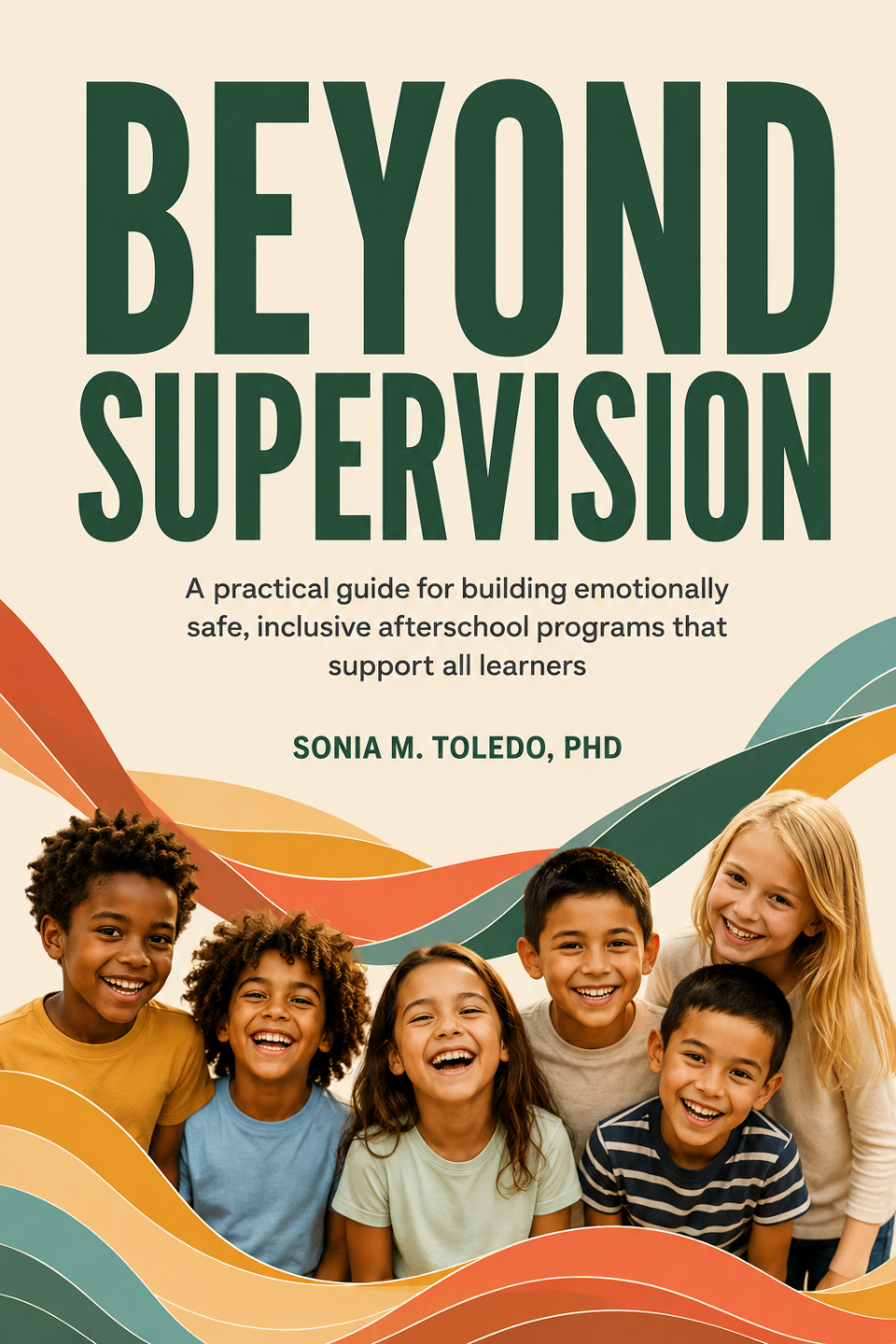
Beyond Supervision walks through all five links of the From Belief to Outcomes framework: Belief, Nervous System, Executive Function, Systems, and Outcomes. Buy the book here. If it has helped your practice, leave a review here.
A Question to Carry into the Week
Before I read anyone else in the room, do I know my own state well enough to trust what I am seeing?
With dignity and purpose,
Dr. Toledo
Sonia Toledo, PhD · Founder and CEO, Dignity of Children · Author, Beyond Supervision
P.S. If this issue named something real about your week, forward it to one colleague or leader who carries the same crowded window you do, and invite them to sign up for The Weekly Practice so it reaches them directly each week.


Join the Safe to Thrive movement HERE
Get your Copy Beyond Supervision
Enroll to Lead with Heart & Mind: 6-Week Guided Transformational Journey HERE
Book Professional Development Workshops for Educators HERE
Book Professional Development Workshops for Leadership HERE
Register for Director's Lab 2.0 - a program for Supervisors and Directors
To discuss your training needs, schedule a one-on-one consultation with me HERE
Dignity of Children
The Weekly Practice · Building quality through discipline, adjustment, and consistency.