DIGNITY OF CHILDREN · DR. TOLEDO
The Weekly Practice
Issue No. 20 Week of November 5th, 2026 Focus: The whole Belief-to-Outcomes Frame
A Message to the Program Director
You have earned a credit that rarely gets handed out at pickup, because the program your community sends its children to is kinder than it was six weeks ago, and that began with your willingness to look at your own practice first. A parent stopped you on Thursday and said it feels different this year; she could not name what had changed, but you could: the three-second story, the sixty-second reset, the diagnostic, the four-part transition, the tracker on the staff room wall. Six weeks of holding a lens while running a program is two jobs at once, and you did both, with staff absences and compliance paperwork and snack deliveries moving through the middle. And the chain you have been building is not another standard you failed to meet before. It is a description of work you were already doing, made visible enough to strengthen.
This week we look at the whole Belief-to-Outcomes frame at once: Belief, Nervous System, Executive Function, Systems, Outcomes, each one a way of seeing the same behavior at a deeper depth. The point of seeing them together is honest adjustment, because every program bends at a different link. Yours is not the same program it was six weeks ago, and the next cycle should not be the same either.
Your emotional intelligence focus this week: honest reflection. Hold the five links in one hand and ask which one bends first in your program, not which one is weakest in theory. Choose that link, and give it the first hour of your next planning block.

THIS WEEK'S FOCUS:
The Whole Belief-To-Outcomes Frame
In 1998, Vincent Felitti and his colleagues published the Adverse Childhood Experiences study, and it reframed what the adults in a room are actually looking at. The study followed more than seventeen thousand adults and found that the adversity people carried from childhood- abuse, neglect, household dysfunction- predicted the leading causes of adult illness and early death decades later. The children in your program are carrying things you will never fully see, and the study's quiet implication is that what happens next depends less on the adversity itself than on whether the adults around a child answer it with punishment or with relationship. That is the whole framework in one sentence.
Two years later, Jack Shonkoff and Deborah Phillips edited From Neurons to Neighborhoods, the National Research Council's landmark review of the science of early development. Its central conclusion reads like the chain we have been climbing: development is shaped by the ongoing interaction between a child and the relationships and environments around the child. Belief sets the story the adult tells. The nervous system sets the safety the child's body finds. Executive function sets the skills the child can reach. Systems set whether any of it repeats on a Tuesday. Outcomes set what the next cycle learns. Remove one link and the frame is furniture; keep them together and it is a practice.

The whole-chain review: five questions, then one choice
1. Belief. What story does my team tell in the first three seconds, and where did we learn it?
2. Nervous System. Where does the program's day protect regulation, and where does it erode it?
3. Executive Function. Which skill does our hardest hour ask for, and who is teaching it?
4. Systems. Which routine is carrying our culture right now, and which one is missing?
5. Outcomes. What are we producing more of this month, and who besides me knows it?
Then the choice: pick the one link your program bent at most often during these six weeks, and open the next cycle there.
Source and reading: Felitti, V. J., Anda, R. F., Nordenberg, D., Williamson, D. F., Spitz, A. M., Edwards, V., Koss, M. P., & Marks, J. S. (1998). Relationship of childhood abuse and household dysfunction to many of the leading causes of death in adults: The Adverse Childhood Experiences (ACE) Study. American Journal of Preventive Medicine, 14(4), 245-258. Shonkoff, J. P., & Phillips, D. A. (Eds.). (2000). From neurons to neighborhoods: The science of early childhood development. National Academy Press.
With dignity and purpose,
Dr. Toledo
Sonia Toledo, PhD
Founder and CEO, Dignity of Children
Author, Beyond Supervision

One Small Step this Week
Book one hour with your team before the cycle restarts. Walk the five questions together, and let the team, not just you, choose the link the next cycle opens with. A frame the whole staff owns is a frame that survives the year.
SECTION 6 · PARTNER HIGHLIGHT
We Cannot Do This Work Alone
None of us builds a strong program in isolation. The leaders who go the furthest are the ones who surround themselves with partners, resources, and people who strengthen the work. Each week I will introduce a new partner you can add to your own resources, so that over time you build a network you can lean on instead of carrying everything yourself.
This week's partner is Dynamic Management Services
Nonprofits hold sensitive employee, member, and client data across cloud-based donor, HR, case management, and program systems, and staff is now adopting AI tools faster than most organizations can put guidance around them. Without dedicated internal capacity, many organizations lack the time, expertise, policies, or affordable support to identify those risks and act on them.
Designed for executive directors, operations and finance leaders, and technology officers, this resource explores how nonprofits can responsibly integrate AI into their organizations. It provides guidance on identifying current AI use, assessing risks across nonprofit workflows, and establishing practical policies, human oversight, and accountability measures.
A nonprofit AI assistant case study illustrates how governance principles can be incorporated directly into an application. Additional guidance addresses legal, privacy, and vendor considerations to help organizations make informed decisions.
As part of this resource, registrants will receive a practical 30-day implementation plan and supporting materials to help put these strategies into action.
Visit our website at www.strategydms.com to learn more about our tools and services for your organization to implement AI with a clear strategic direction. DMS helps nonprofits establish clear responsibilities for AI use, develop tailored AI and cybersecurity policies, train staff, and implement controls within their workflows. We also provide AI application development and integration support.
BEYOND SUPERVISION: A practical guide for building emotionally safe, inclusive afyerschool programs that support all learners.
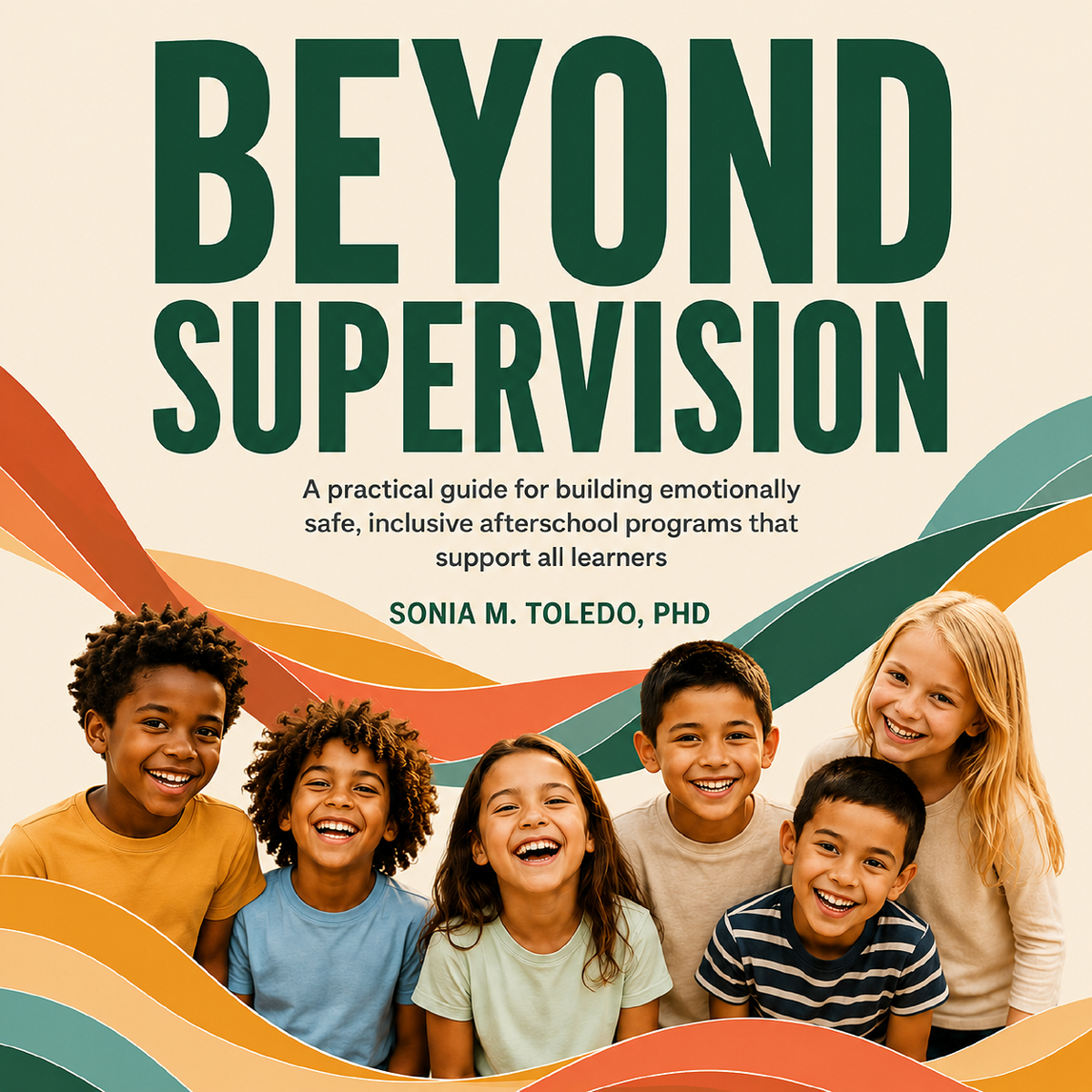
Beyond Supervision holds the whole map, every link in order, with the practices that connect them.
Get your copy: https://www.amazon.com/dp/B0H66NLP7M
Already read it? A review helps other program leaders find it: https://www.amazon.com/review/create-review?&asin=B0H66NLP7M
P.S. If this issue spoke to you, forward it to one program leader or colleague who needs it. If it was forwarded to you, sign up for The Weekly Practice here: https://www.dignityofchildren.com/
Next week the climb begins again at Belief, refined by what this cycle taught you. The concepts stay the same. Your program has changed, and the language will change with it.
A Question to Carry into the Week
Which link needs me most right now?
With dignity and purpose,
Dr. Toledo
Sonia Toledo, PhD · Founder and CEO, Dignity of Children · Author, Beyond Supervision
P.S.
This newsletter gives you one link per week. The whole framework, with room to practice it alongside other program leaders, lives here: https://bit.ly/4dSMCJE
If you know one colleague or leader who needs this, forward this issue to them. They can sign up for The Weekly Practice here.
Next Week
Next week the climb begins again at Belief, refined by what this cycle taught you. The concepts stay the same. Your program has changed, and the language will change with it.



Join the Safe to Thrive movement HERE
Get your Copy Beyond Supervision
Enroll to Lead with Heart & Mind: 6-Week Guided Transformational Journey HERE
Book Professional Development Workshops for Educators HERE
Book Professional Development Workshops for Leadership HERE
Register for Director's Lab 2.0 - a program for Supervisors and Directors
To discuss your training needs, schedule a one-on-one consultation with me HERE
Dignity of Children
The Weekly Practice · Building quality through discipline, adjustment, and consistency.