
DIGNITY OF CHILDREN · DR. TOLEDO
The Weekly Practice
Issue No. 16 Week of October 8th, 2026 Focus: Nervous System
A Message to the Program Director
Take a breath before you read on, because this issue is about the instrument nobody thanks you for playing: your own nervous system. Every child who settled in your program this week settled faster because your body got there first, and your community is a gentler place because of it. The moment a child flips a chair in the cafeteria, your shoulders climb toward your ears before you have decided anything, your breath goes shallow, and your voice finds a register you did not choose. You are the adult in the room, and you are also a body reacting to a body, several times a day, in front of staff who take their cues from you. When your body reacts, it does not mean you are losing your footing. It means you are human, in a job that keeps score.
Here is the truth that changes the job. The child's regulation starts with yours, not because you are to blame for their behavior, but because a dysregulated adult cannot lend calm that does not exist. Your staff read your body before they read your memo, and the child reads both of you. When you settle yourself first, the room has something to borrow, and that is the second link of the Belief-to-Outcomes framework: Nervous System. Your capacity to settle yourself under pressure is not a wellness perk. It is the instrument the whole program plays.
Your emotional intelligence focus this week: self-management. Before you step into the next flashpoint, put your attention at the bottom of your feet and let your exhale run twice as long as your inhale. Practice it in the calm moments too, so it is already there when the noise comes.

THIS WEEK'S FOCUS:
Nervous System
Last week we named the story that gets written in three seconds. This week we look at what the body does while the story is being written, because the child who flipped the chair is not choosing defiance in that moment. His surveillance system has fired, and so has yours.
Stephen Porges gave that surveillance system its name. In a 2004 paper, he described what he called neuroception: the nervous system's subconscious, continuous detection of threat and safety, running below awareness and below language. A child's body scans your face, your voice, and your posture before you have said a word, and it decides from that data whether to open into learning or close into defense. Your calm is not a mood in the room. It is information the child's body is receiving, and it arrives whether or not you intend to send it.
Amy Arnsten's research explains why the order matters so much. In her 2009 review of stress and the brain, she laid out what acute stress does to the prefrontal cortex, the part of the brain that holds reasoning, planning, and impulse control: under sufficient stress, it goes offline, and older, faster systems take over. That is why consequences, reminders, and lectures land so badly mid-escalation. They are addressed to a brain region that has temporarily left the conversation. The intervention that works is the one that goes in the other order: settle the body first, reconnect second, teach third.
The good news is that settling is a small, portable skill. Below is a sixty-second version you can run before you walk into any flashpoint, and teach to every staff member.
The Framework Review: The sixty-second reset, ready to use
1. Exhale slowly through the mouth, letting the exhale last about twice the inhale. One slow cycle, roughly ten seconds.
2. Drop your shoulders and unclench your jaw. Feel your feet on the floor. About five seconds.
3. Silently name what you are walking toward: this is a nervous system asking for safety, not a child choosing defiance. About five seconds.
4. Approach from the side, at eye level, voice low and slow, and offer one line: I am right here. I will wait with you.
Source and reading: Porges, S. W. (2004). Neuroception: A subconscious system for detecting threats and safety. Zero to Three, 24(5), 19-24. Arnsten, A. F. T. (2009). Stress signalling pathways that impair prefrontal cortex structure and function. Nature Reviews Neuroscience, 10(6), 410-422.
With dignity and purpose,
Dr. Toledo
Sonia Toledo, PhD
Founder and CEO, Dignity of Children
Author, Beyond Supervision

One Small Step this Week
Add a two-minute reset to the schedule right after arrival, every day this week, the same three breaths or the same song with the whole group. By Friday, ask one staff member to lead it. You are building regulation into the program's day, not just into your own practice.
SECTION 6 · PARTNER HIGHLIGHT
We Cannot Do This Work Alone
None of us builds a strong program in isolation. The leaders who go the furthest are the ones who surround themselves with partners, resources, and people who strengthen the work. Each week I will introduce a new partner you can add to your own resources, so that over time you build a network you can lean on instead of carrying everything yourself.
This week's partner is Dynamic Management Services
Close Your Compliance Gap
Save money and secure your organization against today’s AI and cyber threats.
As AI transforms the way organizations conduct everyday business, organizations are facing enterprise-level expectations on two fronts at once: proving cybersecurity readiness and adopting AI responsibly. Enterprise-level tools are a burdensome cost to organizations already facing budget constraints and a lack of dedicated staff. With the ongoing threat landscape on both fronts, we work with you to protect your businesses using proven strategies and tools to meet your AI and cybersecurity needs.
Dynamic Management Services closes that gap with customized tools and consulting services to help you manage these risks.
Our self-directed tools are grounded in two federal standards, the NIST Cybersecurity Framework 2.0 and the NIST AI Risk Management Framework, and deliver board-ready, audit-ready documentation at a fraction of traditional consulting costs. With our tools, your organization will meet requirements for federal or state contracts and for cyber-insurance, saving you time and money.
Our cybersecurity and AI governance awareness trainings allow organizations to pair workforce training and written policies into a comprehensive, enforceable layer of protection to support your AI transformation journey.
BEYOND SUPERVISION: A practical guide for building emotionally safe, inclusive afyerschool programs that support all learners.
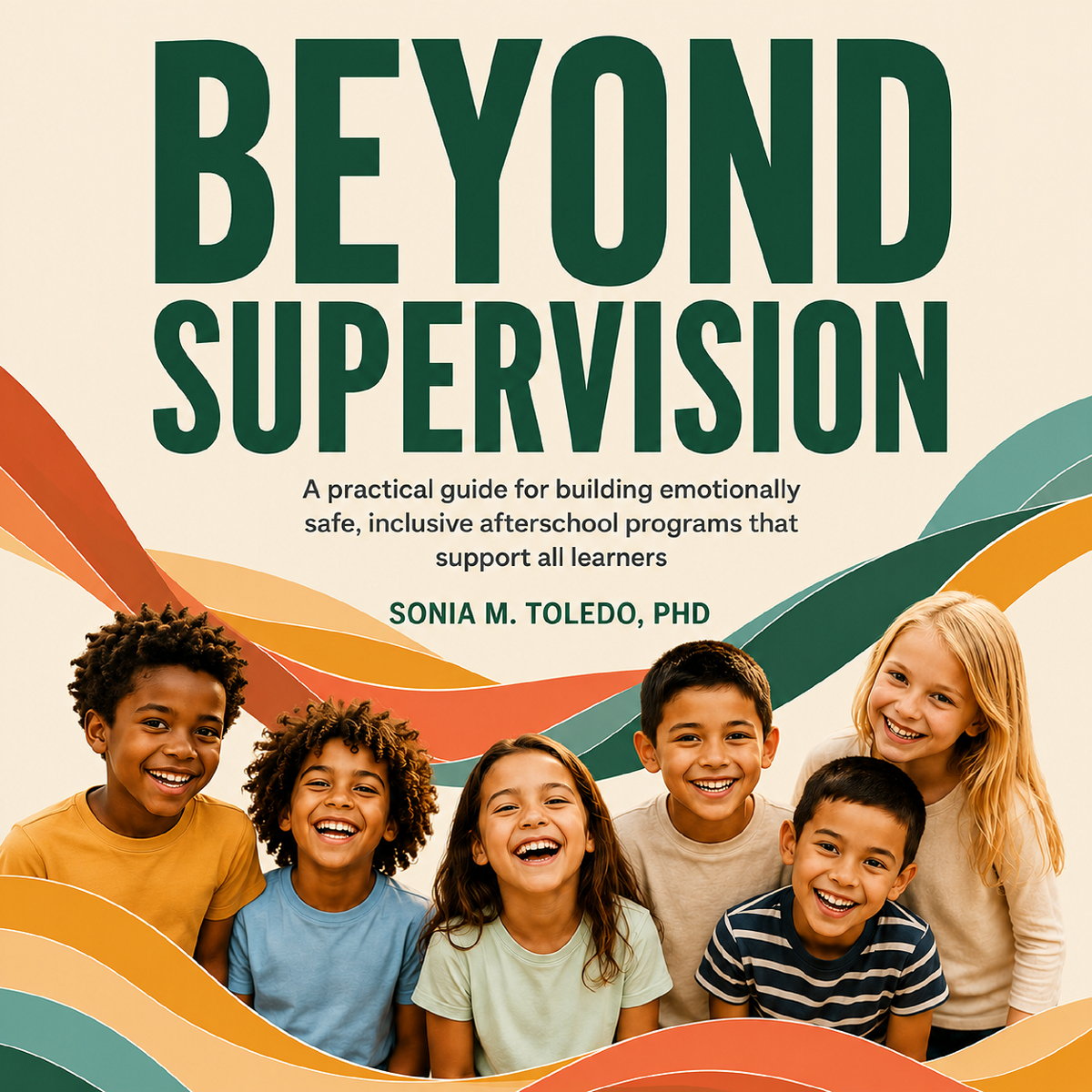
If this week's link is where you want to go deeper, Beyond Supervision walks the whole Belief-to-Outcomes framework, starting with belief.
Get your copy: https://www.amazon.com/dp/B0H66NLP7M
Already read it? A review helps other program leaders find it: https://www.amazon.com/review/create-review?&asin=B0H66NLP7M
P.S. If this issue spoke to you, forward it to one program leader or colleague who needs it. If it was forwarded to you, sign up for The Weekly Practice here: https://www.dignityofchildren.com/
Next week we move to the second link: Nervous System. The story is told in three seconds, but the body answers first, so we will look at what to do in those seconds, in your own body, before you address anyone else's.
A Question to Carry into the Week
What did my body say in the three seconds before I spoke?
With dignity and purpose,
Dr. Toledo
Sonia Toledo, PhD · Founder and CEO, Dignity of Children · Author, Beyond Supervision
P.S.
If this issue spoke to the work you are doing, join our Safe To Thrive Community: https://bit.ly/4dSMCJE
If you know one colleague or leader who needs this, forward this issue to them. They can sign up for The Weekly Practice here.
Next Week
Next week we reach the third link: Executive Function. Once the body is settled, the question changes from why won't they to which skill is actually missing under this behavior.




Join the Safe to Thrive movement HERE
Get your Copy Beyond Supervision
Enroll to Lead with Heart & Mind: 6-Week Guided Transformational Journey HERE
Book Professional Development Workshops for Educators HERE
Book Professional Development Workshops for Leadership HERE
Register for Director's Lab 2.0 - a program for Supervisors and Directors
To discuss your training needs, schedule a one-on-one consultation with me HERE
Dignity of Children
The Weekly Practice · Building quality through discipline, adjustment, and consistency.